
Coming soon
Scrappy Projects

Scrappy Projects
Last night the City of Auburn and JA won an award from Historic Seattle for our renovation of the old Post Office in Auburn. It is now a vibrant arts center called Postmark. The project was a scrappy one.
POSTMARK
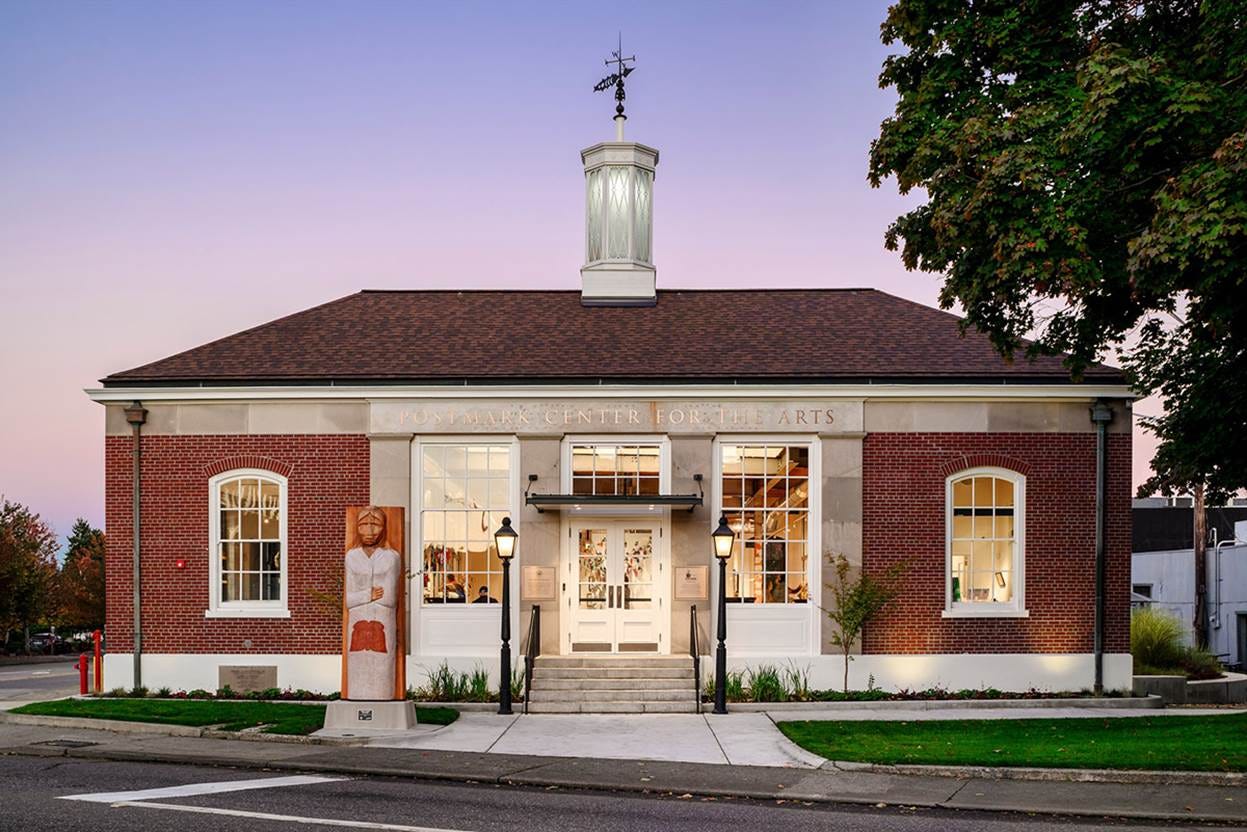
The building, once a post office, became a public health facility before going fallow over a decade ago. It had received various remodels that reflected their time – faux columns and other additions concealed a wonderful steel superstructure, beadboard ceilings and terrazzo floors.
The City of Auburn acquired the building not long after the great recession for a good price. They then applied for and received a series of grants from 4 culture and others.
Work began as funds allowed, beginning with repairs to windows and the start of more intentional planning for the latest iteration of the building. The old Post Office, in the heart of downtown, was adjacent to a defunct dinner theater and to some extent the center of a nascent arts district.
The City Manager, the head of the Parks Department and the new arts director conspired in increments over 7 years to restore the old post office and to give it new life as the Postmark Center for the Arts! City staff, a supportive grantor and a willing design and construction team worked to take advantage of available funds and to make the project happen.
Postmark was scrappy because it came to fruition motivated by optimism and vision.
TWISPWORKS
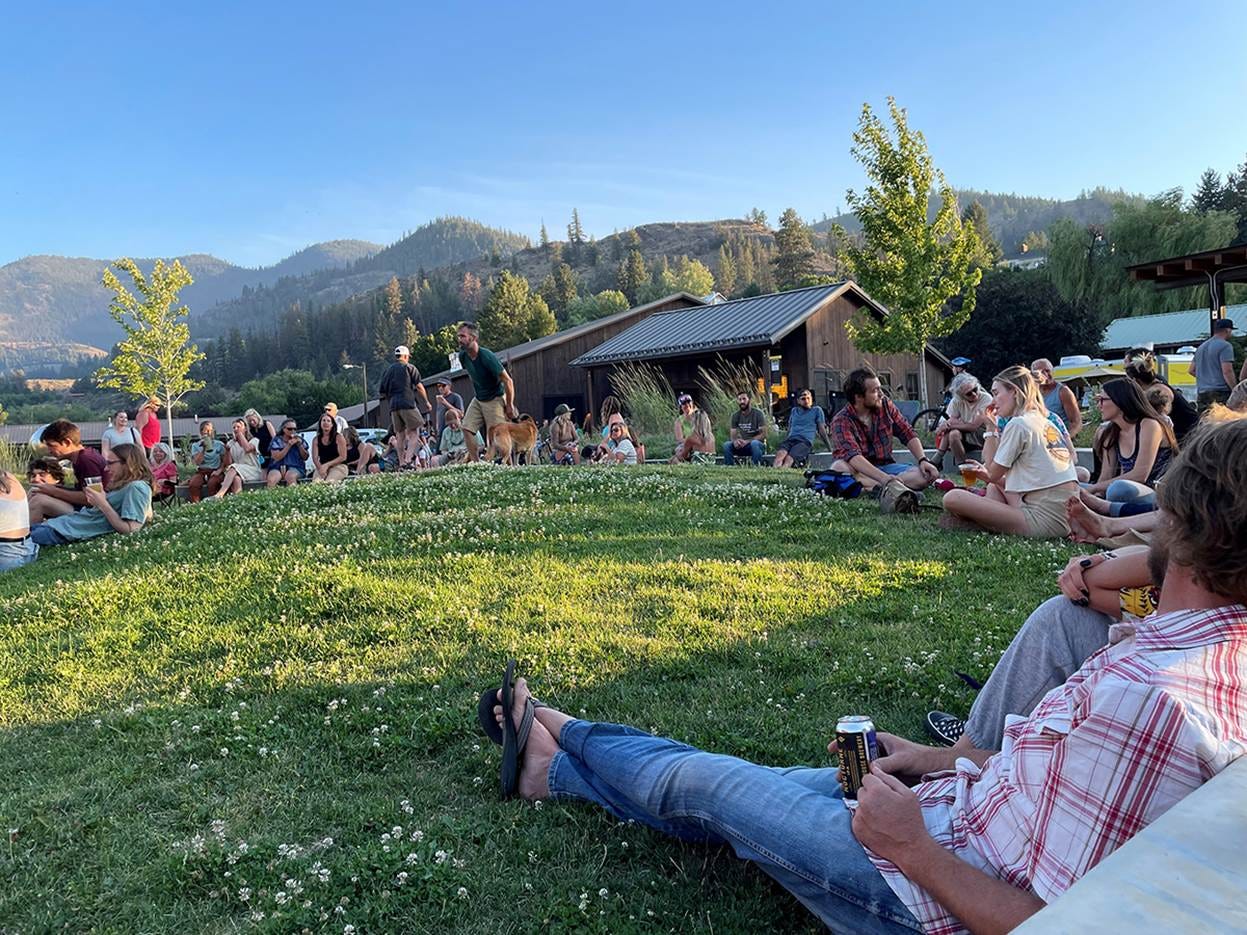
TwispWorks in the Methow Valley is another example of scrappy optimism resulting in a wonderful civic facility. The old Forest Service Complex in the heart of the Town of Twisp had been all but abandoned when it was declared surplus and put up for GSA auction. Its 6.4 acres sported 16 buildings that had fallen into disrepair. An optimistic (and scrappy) cadre of citizens banded together to consider acquisition.
The minimum bid of $1million was daunting and the condition of the facility was a bit frightening. A wise benefactor and patron of the arts offered to fund the purchase with a forgive-able loan. If the ad hoc committee followed through with a new civic campus on the site the loan would be forgiven. Ten years later the 16 buildings were functional, the site had been restored and new buildings were in the works. Creative optimism and community enthusiasm helped to paint a vibrant picture of what the site could be and several individuals and non-profits came together to help make the potential a reality.
Today: “TwispWorks is a dynamic hub for creativity, small business growth, and community collaboration in the Methow Valley. Located in the heart of Twisp, our 6.4-acre campus is home to a thriving mix of artists, entrepreneurs, nonprofits, and educators, all working together to build a vibrant and resilient local economy.”
This amazing development began with optimism. Through thick and thin, the community supported dedicated efforts to create the facility we see today. Countless volunteer hours were expended, but the optimism and the exciting vision were critical. Those elements convinced dozens of individuals, foundations and other organizations to invest philanthropic dollars in the scrappy effort that created TwispWorks.
There are other examples, and we at JA have been fortunate to be part of many. Success requires an opportunity, a vision, optimism, philanthropy and a dedicated group of volunteers!
SHARED ROOF
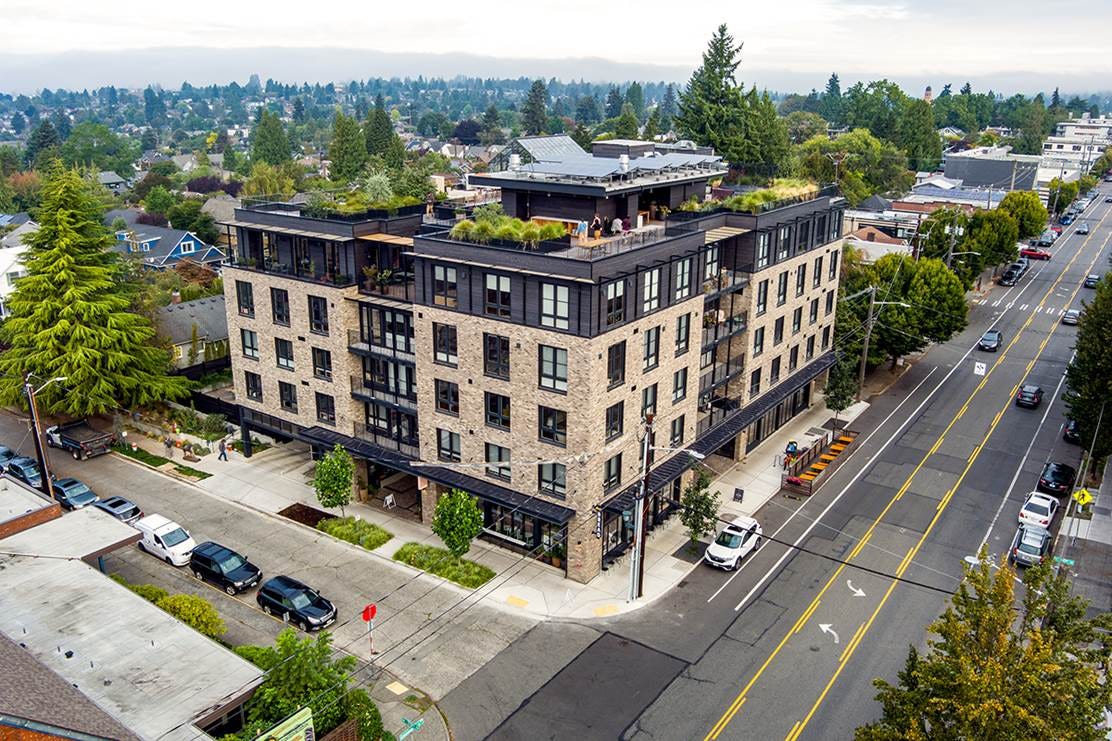
When Chad Dale and a group of friends started looking for places to call home in the heated Seattle real estate market they soon came to grips with the financial realities. Instead of settling for less, this band of 11 young families pooled their resources and, under Chads guidance, found a site upon which to build a unique version of home. Johnston Architects was selected to help make this vision a reality.
Shared Roof is a mixed use building consisting of 35 units, amenity spaces and 5000 sf of retail. 10 of the original families comprise the ownership of the building. Each committed equity to the project and each signed long term leases for a unit. Owner units were customized for each. The remaining 25 units and commercial leases produce dividends that help to defray the cost of each owners lease.
The business model is unique in the Seattle area and so too is the design. Chad and his family had spent time in Amsterdam and fell in love with the colorful and dynamic housing of that city. The character of Amsterdam’s neighborhoods became a touchstone for the design of Shared Roof. Even the roof top gardens, greenhouse and play spaces spring from European models.
This project was driven by a scrappy attitude amongst its owners. The business concept was unique and required a dedicated search for financing. The physical constraints of a building mixing market rate rentals with customized apartments was also daunting. And, navigation of the regulatory environment of Seattle had its challenges as well.
CONCLUSION
Perhaps its not surprising that scrappy projects are not uncommon in the Pacific Northwest. This is just a sampling of the ones we have been involved in. I love the idea that determination, energy and focus (and a bit of funding) can make things happen!
Credits:
Daryl Faber was the Director of Parks, Arts & Recreation (now retired) and Julie Krueger is the current Director of Parks, Arts & Recreation. Alison Hyde is the Arts Program Supervisor for the Postmark Center for the Arts.
Chad Dale was the primary owner contact and visionary for Shared Roof
Ray Johnston was the founding board chair of TwispWorks, serving in that position for 12 years.
Photography: Shared Roof: Andrew Storey; Post Mark: Will Austin; TwispWorks: Steve MitchellThis is Ray's Substack.